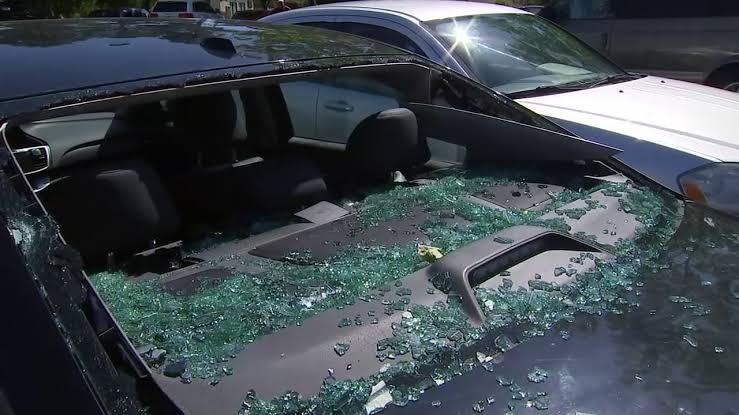
These little slicks of ice suddenly begin pouring from the sky and in a matter of minutes, car bodies with metal ageing hail damage are littered with small dents. The damage appears slight at a distance. But on closer inspection you might find dozens of fine scratches to the bonnet, roof, and boot.
It may not even crack the paint or leave a noticeable scratch. If you know how to spot the symptoms, you will be able to assess the damage beforehand, and pick the appropriate repair.
What Does Hail Damage to Cars Look Like?
Dents caused by hail are typically round and shallow. Their size can vary from small pock marks to those as large as a golf ball.
One more good clue is the pattern. Hail almost always hits the exposed panels, so you might see several dents pooping up across the roof, bonnet, and boot. It could even spill over to the doors and sides of your car.
Look for:
Small, round, or oval dents
- Several dents close together
- Damage across multiple exposed panels
- Little or no paint damage
- Indents that spread randomly instead of along a single line
Check the Car in Good Light
Under cloudy conditions you may not spot small dents, especially during the old garage light. Park the car somewhere with a lot of light and check the panels from varying angles.
Move your eyes across but do not look directly at the surface in question. Reflections can also show small dimples that would otherwise be nearly invisible.
Prevent from pressing hard on a dent to test its mobility. You may scratch the paint or make another dent.
Hail Damage: Are Golf Ball-Sized Dents Hail Damage?
Yes. Dents created by large hailstones can resemble damage from a golf ball surprisingly closely. But, the dent alone does not mean what caused it.
Consider the timing as well. Hail is a fairly safe bet if your car was outside during the time of the large hail and you happened to notice it afterwards.
Look at nearby vehicles, outdoor furniture, and other unprotected surfaces for similar indications. Having multiple properties damaged by that same storm can be very compelling.
Reasons That the Paintless Dent Can Be Suitable
If a panel has been dented from hail, but the paint is still intact, you may be able to get it repaired with paintless dent removal in Melbourne.
This type of repair method requires special tools to re-shape the metal from behind the panel. It may retain factory or original paint, and short-circuit the filling and repaint cycle in appropriate circumstances.
Not every dent can be repaired this way. The depth, location, and state of the paint have all been taken into account.
In What Circumstances Does Hail Damage Require More Extensive Repairs?
A different method may need to be used for deep dents, stretching of the metal, or chipped and cracked paint. The indicated panel fits in need of packing, insect treatment, or replacement.
An assessment from a professional will be able to evaluate the scale of damage. More so if the same panels have multiple depressions.
Hail damage repair in Melbourne will be analysing large extent of area with storm damaged vehicle and deciding which approach is best for restore it.
Does Hail Damage Have to Be Fixed Right Away?
Schedule for an inspection soon after the storm. You can’t notice small dents on the car and they will not change how the car drives, but ignoring visible damage treated at once impacts on aesthetics and saleability of a vehicle.
After the storm, take clear pictures of the vehicle and conditions. These records will also come in handy when you speak to the insurance.
Final Thoughts
Dents of the size of a golf ball is one of the most recognisable signs that hail damage occurs on a car. This is especially true if several panels are hit after storm. Inspect the vehicle thoroughly in good lighting, and do not attempt DIY repairs.
When paintless dent removal in Melbourne is possible, the area may be extracted and returned to its original status without repainting, preserving the finish of the original panel. Professional hail damage repair in Melbourne can restore the vehicle to its pre-damaged state in areas where the damage is more severe.